

NIT Rourkela researchers have developed a process to remove pharmaceutical pollutants from wastewater.
The two-stage process combines adsorption and biodegradation to tackle a wide range of pharmaceutical compounds, including antibiotics, non-steroidal anti-inflammatory drugs (NSIDs), and synthetic dyes.
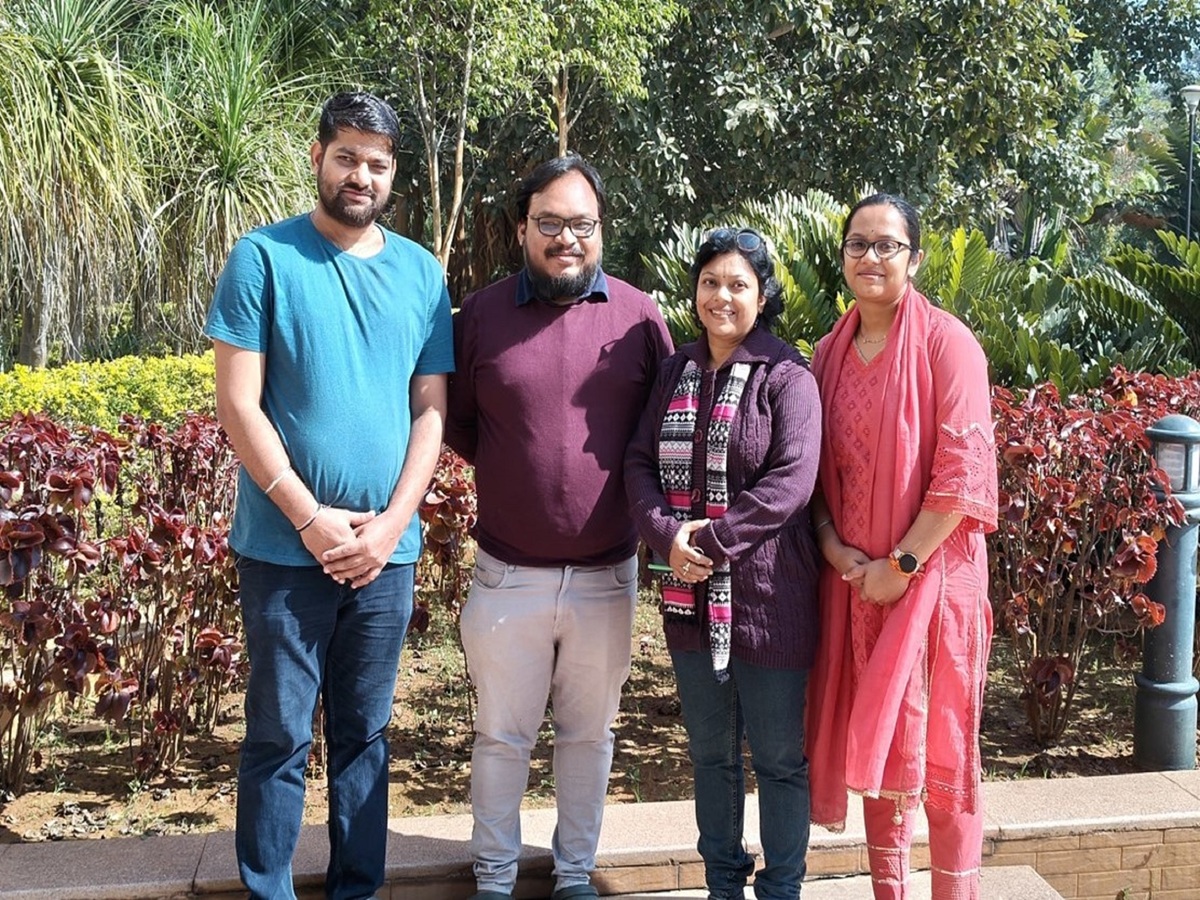
 Researchers of NIT Rourkela
They were led by Prof. Angana Sarkar, Associate Professor, Department of Biotechnology and Medical Engineering.
Their study was published in the prestigious Journal of Water Process Engineering.
The paper has been co-authored by Prof. Angana Sarkar, along with her research team Dr. Kasturi Poddar, Dr. Debapriya Sarkar, (Research graduates) and Mr. Pritam Bajirao Patil (Research scholar).
PhACs
Pharmaceutically active compounds (PhACs) have become contaminants of emerging concern due to their bioaccumulation and biomagnification through the food chain, say NIT Rourkela researchers.
They are posing significant risks to humans and aquatic organisms even at trace concentrations.
These endocrine-disrupting chemicals interfere with hormonal systems, causing acute health issues, say NIT Rourkela researchers.
These pollutants enter water systems through domestic sewage, hospital waste, pharmaceutical industries, and livestock farming, say sources from NIT Rourkela.
Musi river
For instance, a study found that the Musi River, Telangana contained over 5 milligram per liter (mg/L) of ciprofloxacin, an antibiotic, due to nearby drug manufacturing industry.
Adverse effects have been observed in lower trophic levels, such as fish, mussels, and birds, with incidents like fish mortality and declining eagle and vulture populations in the Indian subcontinent.
 Health risk
Additionally, these pollutants pose serious health risk to humans, including kidney and liver damage, hypertension, and developmental issues, say sources from NIT Rourkela.
Antibiotics in wastewater are particularly concerning, as a large amount is excreted unchanged, contributing to the rise of antibiotic-resistant bacteria.
Conventional wastewater treatment methods struggle to remove these contaminants, allowing them to persist in rivers, lakes, and groundwater.
Integrated treatment
To address these challenges, the NIT Rourkela research team developed an integrated treatment process that effectively removes pharmaceutical pollutants through a two-stage approach.
In the first stage, the antibiotics are captured using biochar adsorbents derived from roasted coco peat and rice straw, say NIT Rourkela researchers.
This step significantly reduces antibiotic contamination before the biological treatment phase.
The second stage employs a specialized bacterial group, including Klebsiella and Pseudomonas strains, to break down residual pharmaceutical compounds such as diclofenac, paracetamol, and synthetic dyes.
Test
When tested on synthetic wastewater containing a mix of NSAIDs, antibiotics, and pharmaceutical dyes, the system demonstrated excellent removal efficiencies.
Biodegradation efficiency of pharmaceutical dyes and painkillers was more than 95%.
The biochar adsorption process also proved highly effective, removing over 99.5% of antibiotics from the water, say researchers from NIT Rourkela.
Significance
Prof. Angana Sarkar, Associate Professor, Department of Biotechnology & Medical Engineering, NIT Rourkela, spoke about the significance of the research.
Their innovative integrated system efficiently removed various pharmaceutical pollutants, including antibiotics, NSIDs and dyes, she said.
The process is completely safe using biologically derived methods with no toxic intermediates, she said.
The process protects biodegrading bacteria, minimises toxic byproducts, and enhances the eco-friendly management of pharmaceutical contaminants, she said.
The treatment costs about Rs. 2.6 per liter and it can be further reduced by process optimization and integrating this system as a tertiary step in existing treatments, said Prof Angana of NIT Rourkela.
Non toxic
The researchers of NIT Rourkela suggest that this process is nontoxic, sustainable, and cost effective that can be scaled up in near future in collaboration with the pharmaceutical industries.
The system, demonstrated with model pharmaceutical compounds, can be applied to other molecules with similar structures.
Further treatment through standard wastewater treatment eliminates the need for additional stages for bacteria and solid residue removal, say sources from NIT Rourkela.
Future studies
Future studies will focus on recovering and purifying adsorbed antibiotics from biochar, offering a valuable resource that could generate profit and reduce pharmaceutical manufacturing costs.
This recovery could make medicines more affordable for underserved communities. Additionally, antibiotic-free biochar can be repurposed as fertilizer, ensuring a zero-waste process
 Funding
This project was funded by Science and Engineering Research Board (Under IMPRINT-2: Impacting Research Innovation and Technology, Government of India Scheme) and research work was conducted in collaboration with Cadila Pharmaceutical Ltd., Ahmedabad, India.
Also Read – NIT Rourkela develops great AI powered model
Next article
How to Apply for JEE Main 2027: Registration Process, Documents & more