UGC NET 2020: Great, tips to crack the exam

UGC NET 2020, cracking this competitive exam will determine the eligibility of the applicants for assistant professorship at college and universities.
Candidates write UGC NET 2020 in no less number every year. According to sources, more than five lakhs candidates are said to write the exam with a hope of being eligible for assistant professorship or a research fellowship.


It is estimated that out of some lakh candidates who appear for UGC NET, about thousands only manage to get qualified for the exam. This being the case, one can imagine the level of preparedness required to crack the exam.
collegechalo.com brings the preparation tips with a motive of helping the candidates prepare effectively for UGC NET 2020. UGC NET 2020 is held in computer based mode for over 81 subjects.
The exam will have two papers, namely Paper-1 and Paper-2, UGC NET 2020 will be conducted in two shifts, first shift is in the morning from 9:30 am to 12:30 pm, second shift is in the afternoon from 2:30 pm to 5:30 pm.

The questions in UGC NET 2020 are based on applicant’s subject in post graduation. While post graduation course is for two years, the biggest challenge for the applicants of UGC NET 2020 is to learn the lessons of two years in a lesser duration.
Candidates have learn the lessons taught in their respective PG course over two years duration in less time for UGC NET 2020. Though this seems to be no easy task, but can be achieved if applicants follow certain tips. They are mentioned below:

Syllabus and question pattern
Applicants of UGC NET 2020 have to first of all know the syllabus of their respective subjects for the exam. They should also know the pattern of questions appearing in the exam. The best way to do this is to refer to the question papers of previous exams.
Make a note
Applicants for UGC NET 2020 must also make a note of the basics of their respective subjects. Every chapter in the subject will have certain basic points based on which lesson will further proceed, candidates must remember these basic points and make a note of them.
Practice, practice, practice
Practice makes man perfect in the saying and this holds true with regards to UGC NET 2020. Undertake revisions regularly after the main learning process is over, this will help remembering the lessons for a long time.
Focus should be more on lessons which are considered very important. That does not mean one should not give enough attention to other chapters in the subject.


Mock tests
Applicants for UGC NET 2020 can take part in mock tests and try solving the questions in a set time frame. This may be difficult initially, however with repeated practice applicants can easily achieve that.
Speak to experts
Speaking to subject matter experts, particularly those who have good knowledge about UGC NET 2020 will help gain more inputs on how to prepare for the exam.
Similarly, talking to candidates who have been successful in cracking the exam also can fetch us lot of valuable hints which may help us crack the exam. Candidates can have access to the syllabus of UGC NET 2020 exam on the official link of UGC website ‘https://www.ugc.ac.in/net/syllabus.aspx‘
About UGC
Soon after Independence, the University Education Commission was set up in 1948 under the Chairmanship of Dr. S Radhakrishnan “to report on Indian university education and suggest improvements and extensions that might be desirable to suit the present and future needs and aspirations of the country”.
It recommended that the University Grants Committee be reconstituted on the general model of the University Grants Commission of the United Kingdom with a full-time Chairman and other members to be appointed from amongst educationists of repute.
In 1952, the Union Government decided that all cases pertaining to the allocation of grants-in-aid from public funds to the Central Universities and other Universities and Institutions of higher learning might be referred to the University Grants Commission. Consequently, the University Grants Commission (UGC) was formally inaugurated by late Maulana Abul Kalam Azad, the then Minister of Education, Natural Resources and Scientific Research on 28 December 1953.
The UGC, however, was formally established only in November 1956 as a statutory body of the Government of India through an Act of Parliament for the coordination, determination and maintenance of standards of university education in India.
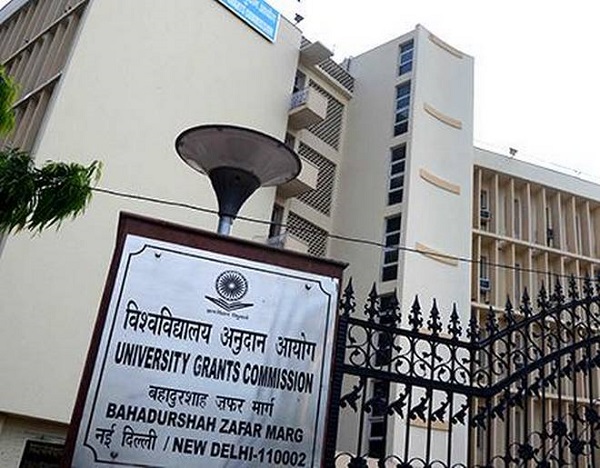
In order to ensure effective region-wise coverage throughout the country, the UGC has decentralised its operations by setting up six regional centres at Pune, Hyderabad, Kolkata, Bhopal, Guwahati and Bangalore. The head office of the UGC is located at Bahadur Shah Zafar Marg in New Delhi, with two additional bureaus operating from 35, Feroze Shah Road and the South Campus of University of Delhi as well.

S Vishnu Sharmaa now works with collegechalo.com in the news team. His work involves writing articles related to the education sector in India with a keen focus on higher education issues. Journalism has always been a passion for him. He has more than 10 years of enriching experience with various media organizations like Eenadu, Webdunia, News Today, Infodea. He also has a strong interest in writing about defence and railway related issues.
Related News
Vignan University Admission 2026: Dates, Fees, Eligibility, Application Process

Vignan University, officially known as Vignan’s Foundation for Science, Technology & Research (VFSTR), is one of India’s leading deemed-to-be universities, located in the Guntur district, Andhra Pradesh. Known for its strong academic framework, industry-oriented curriculum, and modern infrastructure, Vignan University attracts thousands of students every year from across the country.
Vignan University Admission 2026 will be conducted for a wide range of undergraduate (UG), postgraduate (PG), and doctoral (PhD) programs in engineering, management, science, law, pharmacy, agriculture, and humanities. This article provides a comprehensive overview of important dates, eligibility criteria, course-wise fees, entrance exams, and the complete application process to help students make informed decisions.

About Vignan University
Established in 2008 and recognised by the University Grants Commission (UGC), Vignan University has earned a strong reputation for academic excellence, research innovation, and placement support. The university follows outcome-based education and emphasises skill development, entrepreneurship, and global exposure.
Key highlights of Vignan University include:
-
NAAC-accredited institution
State-of-the-art laboratories and research centres

Strong industry collaborations
Dedicated placement and career guidance cell
Scholarships for meritorious and deserving students

Vignan University Admission 2026 – Important Dates (Tentative)
The official admission schedule for 2026 will be released on the university’s website. Based on previous admission cycles, the tentative timeline is as follows:
-
Release of Application Forms: December 2025
Last Date to Apply: March–April 2026
Entrance Exam (Vignan Admission Test – VAT): April–May 2026

Result Declaration: May 2026
Counselling & Seat Allotment: May–June 2026
Commencement of Classes: July–August 2026
Note: Dates may vary for different programs and national-level entrance exams.
Courses Offered at Vignan University
Undergraduate (UG) Programs
-
B.Tech (CSE, AI & DS, AI & ML, ECE, EEE, Mechanical, Civil, Biotechnology)
B.Sc (Agriculture, Data Science, Computer Science)
BBA
BCA
BA
B.Com
B.Pharm
BA LLB / BBA LLB
Postgraduate (PG) Programs
-
M.Tech (Various Specialisations)
MBA
MCA
M.Sc
M.Pharm
LLM
Doctoral Programs
-
PhD in Engineering, Management, Science, Humanities, and Allied Disciplines
Vignan University Admission 2026 – Eligibility Criteria
UG Eligibility Criteria
-
Candidates must have passed 10+2 or equivalent from a recognized board
For B.Tech: Physics, Chemistry, and Mathematics as compulsory subjects
Minimum aggregate marks: 50% (45% for reserved categories)
Valid score in Vignan Admission Test (VAT) or accepted national-level entrance exams
PG Eligibility Criteria
-
Bachelor’s degree in a relevant discipline from a recognised university
Minimum aggregate of 50% marks
Entrance exam score (VAT / GATE / CAT / MAT, depending on the program)
PhD Eligibility Criteria
-
Master’s degree in the relevant field with at least 55% marks
Candidates must qualify in the PhD entrance test and interview conducted by the university
Entrance Exams Accepted by Vignan University
Vignan University conducts its own entrance examination called the Vignan Admission Test (VAT) for various UG and PG programs. In addition, it also accepts scores from national-level exams such as:
-
JEE Main – B.Tech
AP EAMCET – Engineering & Agriculture
CAT / MAT / XAT / CMAT – MBA
GATE – M.Tech
GPAT – M.Pharm
Admission is granted based on entrance exam performance, academic record, and counselling process.
Vignan University Fees Structure 2026 (Expected)
The fee structure varies depending on the course and specialisation. Below is an approximate annual fee range:
UG Fees
-
B.Tech: ₹2,00,000 – ₹2,40,000 per year
BBA / BCA / B.Com: ₹80,000 – ₹1,20,000 per year
B.Sc Agriculture: ₹1,50,000 – ₹1,80,000 per year
Law Programs: ₹1,20,000 – ₹1,50,000 per year
PG Fees
-
M.Tech: ₹1,20,000 – ₹1,60,000 per year
MBA: ₹1,50,000 – ₹2,00,000 per year
MCA: ₹1,20,000 – ₹1,50,000 per year
PhD Fees
-
PhD programs typically range from ₹60,000 – ₹1,00,000 per year
Additional charges may apply for hostel accommodation, transportation, and other facilities.
Scholarships at Vignan University
Vignan University offers various scholarships to support students financially:
-
Merit-Based Scholarships for top entrance exam rankers
Sports Scholarships for national and state-level players
Need-Based Financial Assistance
Government Scholarships for eligible reserved categories
Scholarships may cover partial or full tuition fees depending on performance and eligibility.
Vignan University Application Process 2026
The application process is completely online and user-friendly. Follow the steps below to apply:
Step 1: Online Registration
-
Visit the official Vignan University admission portal
Register using a valid email ID and mobile number
Step 2: Fill Application Form
-
Enter personal, academic, and contact details
Select the desired course and specialisation
Step 3: Upload Documents
-
Passport-size photograph
Signature
Academic certificates and mark sheets
Step 4: Pay Application Fee
-
Pay the application fee online via debit card, credit card, or net banking
Step 5: Submit Application
-
Review all details carefully
Submit the form and download the confirmation page
After submission, candidates must appear for the entrance exam, followed by counselling and document verification.
Counselling and Admission Process
-
Shortlisted candidates are invited for counselling
Seat allotment is based on rank, preferences, and availability
Candidates must pay the admission fee to confirm their seat
Final admission is granted after document verification
Why Choose Vignan University?
-
Strong academic reputation
High placement rates with top recruiters
Industry-focused curriculum
Research-driven learning environment
Excellent campus facilities and student life
Graduates from Vignan University are placed in reputed organizations across IT, core engineering, management, and research sectors.
Conclusion
Vignan University Admission 2026 offers a promising opportunity for students seeking quality education, practical exposure, and strong career prospects. With a wide range of UG, PG, and PhD programs, competitive entrance exams, and comprehensive student support, Vignan University continues to be a preferred choice for higher education in India.
Candidates are advised to regularly check official notifications, prepare well for entrance exams, and complete the application process within deadlines to secure admission.
Vani Jha is a creative content writer with over 2 years of experience in producing engaging, informative, and well-researched content across various domains. Her expertise lies in SEO, research, editing, and content and copywriting. With a proven track record in enhancing online presence and audience engagement, Vani excels in crafting compelling articles, blogs, and other written materials.
Related News
Exam News
RBSE 2026 Exam Dates Out: Class 10 & 12 Date Sheet Expected Soon — Live Updates
12 Dec, 2025
CLAT 2026 Answer Key Released LIVE: Check NLU Key, Response Sheet & Calculate Your Score
11 Dec, 2025
How to Fill the NDA 2026 Application: A Step-by-Step Guide
11 Dec, 2025
Five Essential Eligibility Rules for JEE Advanced 2026 Revealed by IIT Roorkee
9 Dec, 2025
Featured News
Pandit Deendayal Upadhyaya Telecom Excellence Awards 2024: Apply by September 30 at awards.gov.in
12 Aug, 2024
Top 20 Management Colleges in Telangana
12 Aug, 2024
Top 20 Colleges for Psychology in India
11 Aug, 2024
Top IITs Launch Future-Proof Courses : New Tech-Savvy Courses in 2024
11 Aug, 2024
Hindenburg Research: A Crucial Study for Commerce Students
10 Aug, 2024
College News
MUJ Achieves a Historic Academic Milestone: 2000+ Scopus Publications in a Single Year!
12 Dec, 2025
Building the Future Together: ICSDG 2025 Panel on Industry–Academia Synergy
10 Dec, 2025
Experience the MBA Journey First-Hand: A Special Webinar for Aspirants
8 Dec, 2025
Amity University Jaipur Organises HR Conclave 2025
5 Dec, 2025