


Researchers from IIT Guwahati have developed novel materials that can efficiently harvest water from humid air.
Researchers from IIT Guwahati comprising Dr. Uttam Manna, Associate Professor, Chemistry department and Centre of Nanotechnology, IIT Guwahati along with his research scholars Mr. Kousik Maji, Mr. Avijit Das and Ms. Manideepa Dhar have published the results of this path-breaking work in the prestigious journal of ‘The Royal Society of Chemistry.’
Researchers from IIT Guwahati develop great method to harvest water
 This work by researchers from IIT Guwahati is said to have lot of significance especially when the whole world is battling water shortage.
Scientists have turned to nature to design ways of water harvesting.
For example, in regions of the world with naturally scanty rainfall, plants and insects have devised ingenious strategies to pull and collect water right out of the air.
Mimicking this, scientists worldwide are trying to build technologies that can pull out water from thin air, both literally and figuratively.
It is amidst these circumstances that the work of researchers from IIT Guwahati is expected to turn beneficial.
Such water-harvesting techniques use the concept of hydrophobicity or water-repelling nature of some materials, explains Dr. Manna who led the team of researchers from IIT Guwahati.
The man who led the team of researchers from IIT Guwahati further said the concept of hydrophobicity can be understood by looking at the lotus leaf.
The lotus leaf is water repellent because there is a layer of trapped air between the leaf surface and the water droplet, which causes the droplet to slide off the leaf.
However simple hydrophobicity such as this is unsuitable for water harvesting from highly humid environments because high moisture content can displace the trapped air and cause permanent damage, say the researchers from IIT Guwahati.
 Instead, researchers mimic the pitcher plant, an ‘insect-eating’ plant, that has a slippery surface that causes insects that land on it to fall into its tube-shaped structure, to be digested, said Dr. Manna who led the researchers from IIT Guwahati.
In the past geometries of rice leaves and cacti are associated with ‘Slippery Liquid-Infused Porous Surface(s)’ or SLIPS to improve the water harvesting performance, he said.
The researchers from IIT Guwahati have used the concept of chemically patterned SLIPS for the first time, to effectively harvest water from moist air.
Researchers from IIT Guwahati produced a patterned hydrophilic SLIP by spraying a sponge-like porous polymeric material on top of a simple A4 printer paper.
Further, chemically modulated hydrophilic spots were associated on the coating prior to lubricating with two distinct types of oils – natural olive oil and synthetic krytox, say researchers from IIT Guwahati.
This surface could harvest water from foggy/water vapour laden air without the need for any cooling arrangement.
‘We have produced a highly efficient water harvesting interface where the fog collecting rate is as high as 4400±190 mg/cm2/h,’ says Dr. Uttam Manna, who led the researchers from IIT Guwahati.
Given that more than 50% of India’s population has no access to safe drinking water and about 200,000 people die every year due to lack of access to safe water, the inexpensive method for harvesting water from water vapour or fog droplets in air can potentially alleviate the water scarcity issues in the country, say the researchers from IIT Guwahati.
Apart from water harvesting, SLIPS could be used for other purposes, such as easily cleanable household appliances, in underwater hulls of ships and submarines to prevent bio-fouling and anti-icing windows for aircraft.
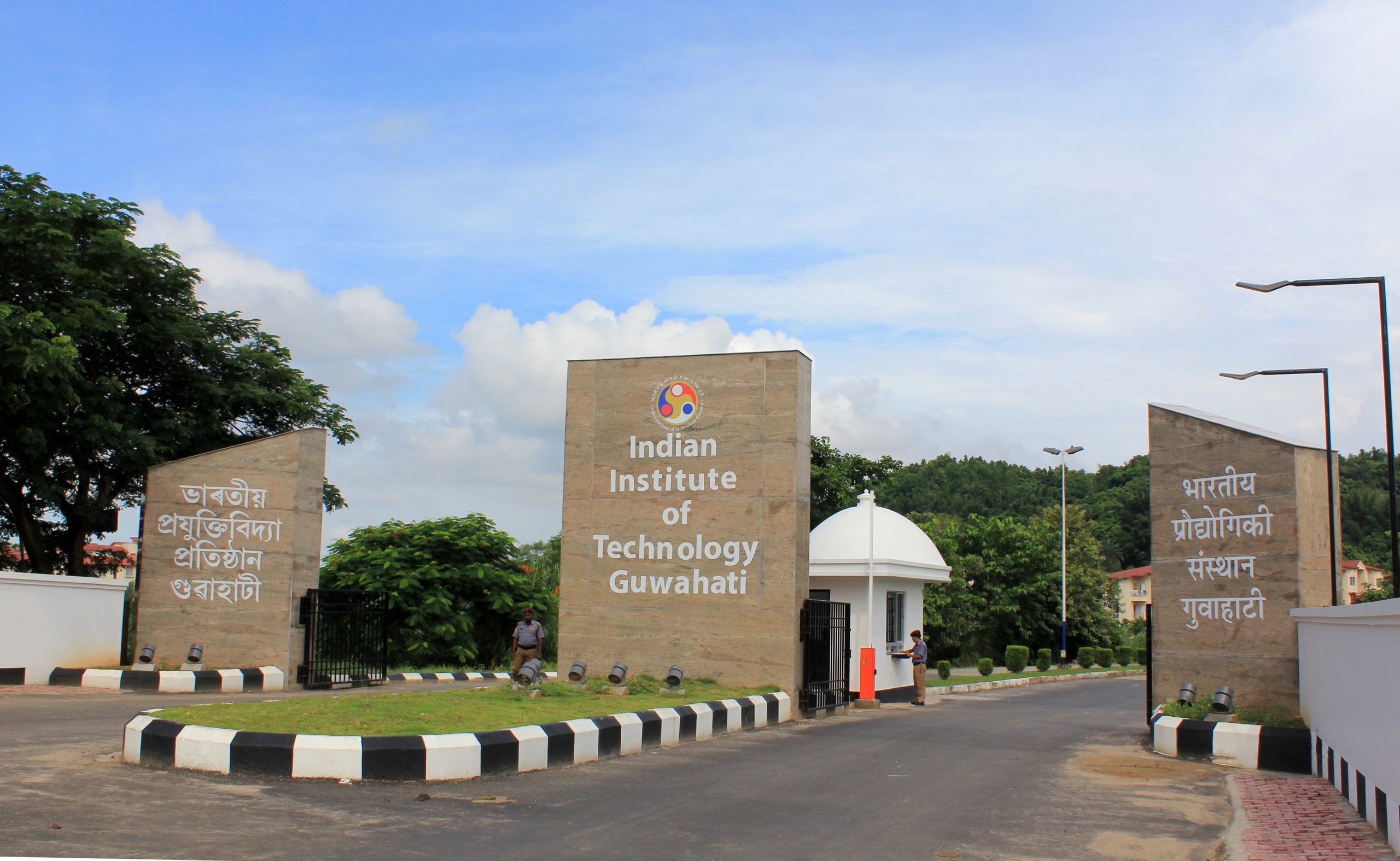 About IIT Guwahati
Indian Institute of Technology (IIT) Guwahati established in 1994 has completed 25 years of glorious existence in 2019.
At present, the Institute has eleven departments and five inter-disciplinary academic centres covering all the major engineering, science and humanities disciplines, offering BTech, BDes, MA, MDes, MTech, MSc and PhD programmes.
The Institute offers a residential campus to 412 faculty members and more than 6,000 students at present.
Besides its laurels in teaching and research, IIT Guwahati has been able to fulfil the aspirations of people of the North East region to a great extent since its inception in 1994.
The picturesque campus is on a sprawling 285 hectares plot on the north bank of the Brahmaputra, around 20 kms from the heart of the Guwahati city.
Next article
How to Apply for JEE Main 2027: Registration Process, Documents & more